How Nations Find Their Competitive Edge in Aerospace
What Brazil and Morocco reveal about different paths to success in the global aerospace industry.
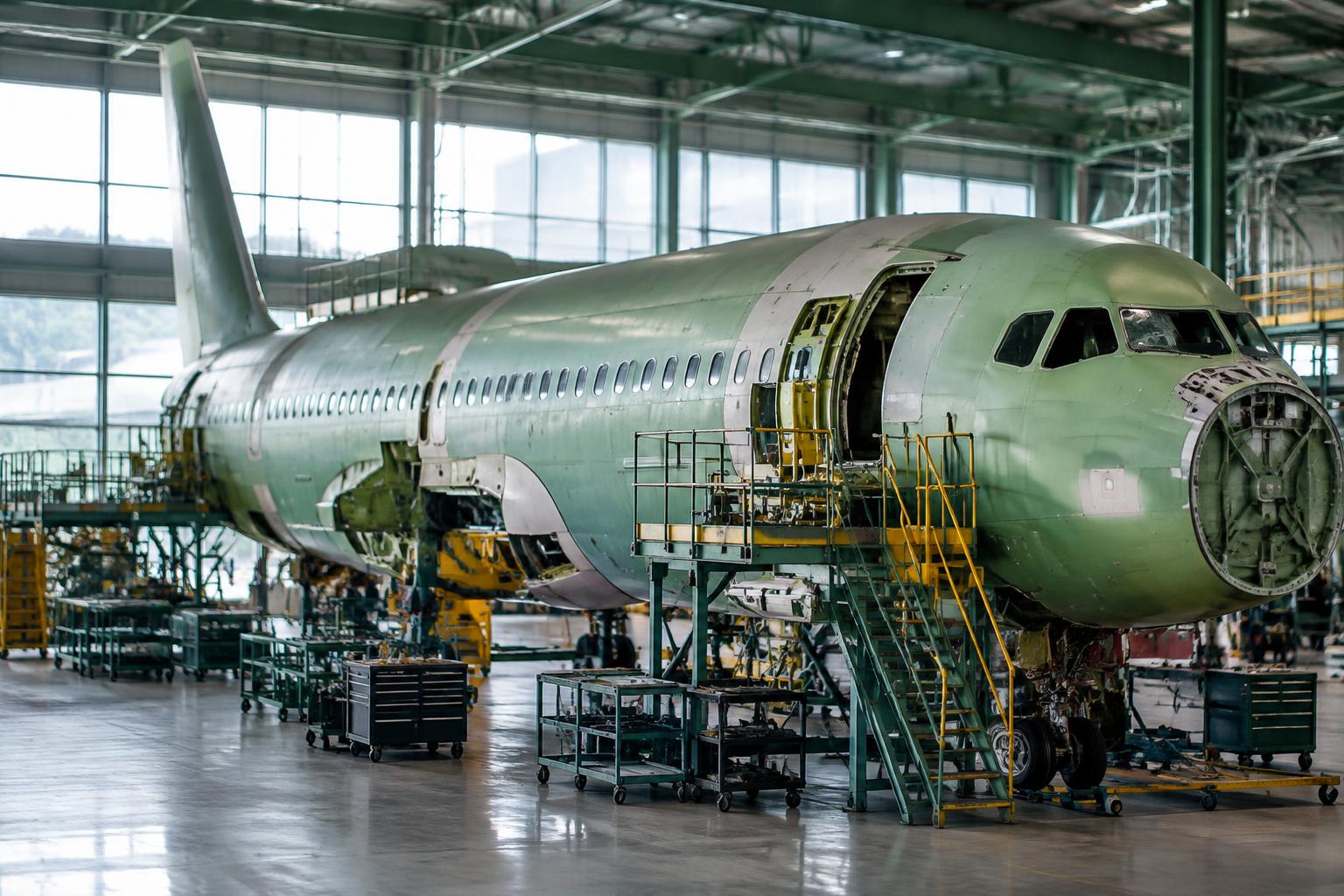
For decades, the global aerospace industry has been dominated by a handful of established industrial centers. Seattle, Toulouse and Montréal have developed extensive ecosystems around aircraft production, supported by specialized suppliers, engineering expertise and decades of accumulated knowledge.
Yet building a competitive aerospace industry does not necessarily mean building aircraft.
Brazil and Morocco illustrate two distinct approaches to establishing a position in one of the world's most technologically demanding industries. While Brazil developed its own globally competitive aircraft manufacturer, Morocco has built a growing aerospace manufacturing ecosystem by integrating into international supply chains.
Their experiences demonstrate how countries can develop competitive advantages within the same industry through different industrial strategies.
Different Paths to Aerospace Competitiveness
Brazil's aerospace industry is closely associated with Embraer, established in 1969 with government support.
The company's development was supported by long-term investments in engineering education, research and industrial capabilities, particularly around São José dos Campos.
Over the decades, Embraer evolved into a major international aircraft manufacturer, competing in commercial aviation, business jets and defense. Its success illustrates how sustained investment in technological expertise can enable a country to develop the capabilities required to design, integrate and manufacture aircraft.
Embraer's Annual Revenue, 2021–2025
Annual revenue in US$ billions
$7.58 billion
2025 revenue
≈ 81%
Revenue growth since 2021
Source: Embraer annual financial results and SEC filings. Verify all figures against the original reports before publication.
Morocco has followed a different trajectory.
Rather than pursuing a national aircraft manufacturer, the country has concentrated on attracting international aerospace companies and developing specialized manufacturing capabilities.
Companies such as Safran have established operations in Morocco, supporting activities ranging from electrical wiring to mechanical components and aircraft systems.
Proximity to European aerospace centers, investment in industrial infrastructure and workforce development initiatives have helped Morocco establish itself within global aerospace production networks.
Morocco's Aerospace Exports, 2014–2024
Aerospace exports in US$ billions
$914 million
2014 exports
$2.66 billion
2024 exports
≈ 191%
Growth over the period, in USD terms
Source: Morocco's Office des Changes and historical USD/MAD annual average exchange rates. USD values are approximate and should be verified before publication.
The contrast is significant. Brazil developed a company capable of designing and integrating aircraft, while Morocco established a competitive position as a manufacturing and supply-chain partner to international aerospace companies.
Both experiences demonstrate that aerospace competitiveness can take different forms depending on a country's industrial capabilities and strategic priorities.
Why Aerospace Is Different
Unlike many manufacturing industries, aerospace presents exceptionally high barriers to entry.
Aircraft production requires substantial capital, advanced engineering expertise and compliance with demanding safety and certification standards. Suppliers must demonstrate consistent quality and reliability, often within production programs extending over several decades.
These characteristics reinforce the advantages of established aerospace ecosystems and make entry particularly challenging for new participants.
Competitive labor costs and investment incentives alone are rarely sufficient. Countries must also develop specialized talent, reliable suppliers, industrial infrastructure and long-term relationships with international manufacturers.
Brazil's experience highlights the importance of accumulating domestic technological expertise, while Morocco demonstrates how specialization and foreign investment can provide access to sophisticated international production networks.
Attracting aerospace manufacturing activity and developing the capabilities to compete independently are not necessarily the same achievement.
Building the Next Aerospace Hub
The experiences of Brazil and Morocco offer valuable lessons for countries seeking to establish or strengthen their aerospace industries.
The starting point is identifying where a country can realistically compete. Existing strengths in precision manufacturing, electronics, engineering or advanced materials may provide opportunities to enter specific segments of the aerospace value chain.
The next challenge is connecting these capabilities to international demand. Attracting established manufacturers can open access to global production networks, but supplier certification, technical training and industrial partnerships are essential to sustaining that participation.
Over time, countries can seek to deepen their industrial capabilities by expanding into more sophisticated manufacturing, engineering, testing and systems development.
However, developing a globally competitive aerospace industry does not necessarily require creating a national aircraft manufacturer. Becoming a highly specialized supplier can itself represent a valuable position within the industry.
For governments and investment promotion agencies, this calls for a selective approach to industrial development. Rather than attempting to replicate established aerospace centers, strategies should build on existing capabilities, target realistic opportunities and support the gradual development of specialized expertise.
Brazil and Morocco demonstrate that there is no universal model for aerospace success.
The real competitive advantage lies not in replicating another country's industrial strategy, but in identifying where an economy can create value and developing the capabilities to sustain that position over time.
Want to discuss what this means for your organization?
Get in touch